Pratik Kamble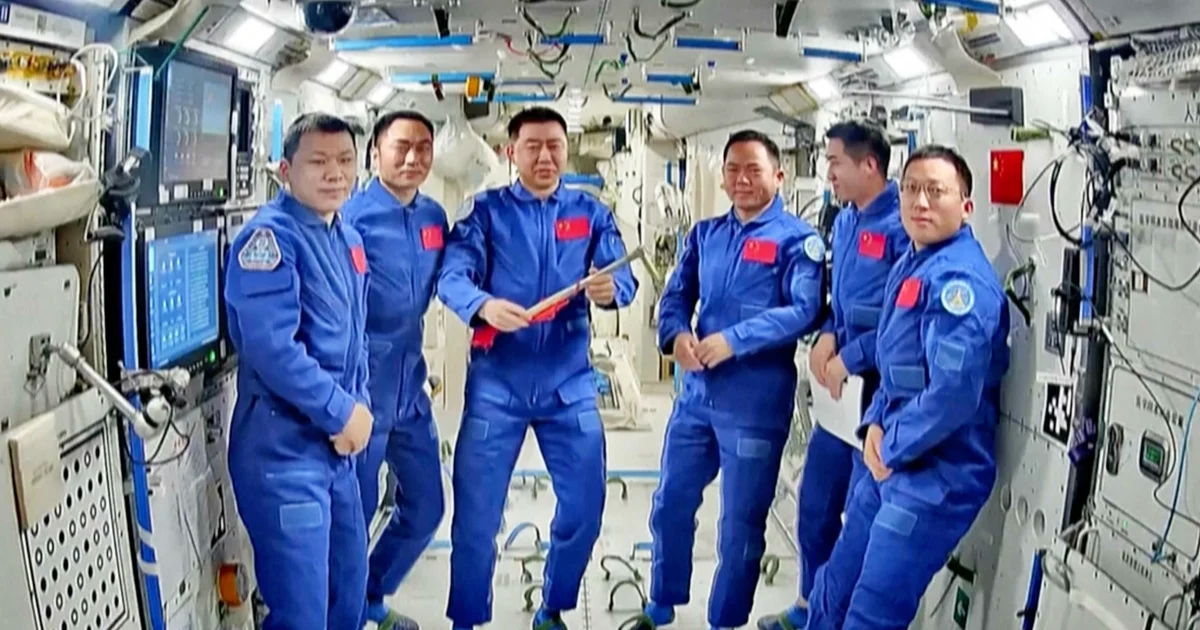
🛰️ Shenzhou-20 Crew Stranded: Taikonauts Safe After Space Debris Delays Return
The three taikonauts of China’s Shenzhou-20 mission are temporarily “stranded” aboard the Tiangong space station after their planned return to Earth was postponed indefinitely. The delay was announced by the China Manned Space Agency (CMSA) after their return spacecraft was suspected of being struck by a small piece of space debris.
Despite the extended stay, the CMSA has reassured the world, stating: “The Shenzhou-20 crew is in good condition, working and living normally.” This situation underscores the critical and growing threat of orbital debris to all crewed space missions worldwide.
💥 The Debris Impact and Safety Assessment
The crew—Commander Chen Dong, Operator Chen Zhongrui, and Flight Engineer Wang Jie—were originally scheduled to undock and return to Earth on November 5 after completing their planned six-month rotation.
The Cause of the Delay
Engineers discovered signs of a possible impact on the Shenzhou-20 return capsule. At orbital speeds, even a millimeter-sized piece of debris carries immense kinetic energy and can cause catastrophic damage to crucial systems, such as the heat shield required for atmospheric re-entry or the parachute deployment system.
To ensure the principle of “life first, safety first,” the CMSA immediately postponed the mission. The agency activated emergency procedures, which involve:
- Comprehensive Simulation Analysis: Rigorous testing and modeling to determine the integrity of the capsule’s heat shielding and critical mechanical parts.
- Quality Confirmations: Detailed reviews of the status of all essential return products, including the navigation and power systems.
👥 Dual Crews and Contingency Plans
The situation, while serious, is not immediately life-threatening due to China’s planning and the recent successful arrival of the relief crew.
Tiangong: A Safe Haven
The Tiangong space station is fully operational and well-stocked, acting as a temporary safe haven. The Shenzhou-20 crew is currently operating alongside the newly arrived crew of the Shenzhou-21 mission, creating an unusual six-taikonaut crew. The temporary increase in personnel is being used for joint scientific experiments and the continued maintenance of the station.
The Backup Plan (Shenzhou-22)
If the ongoing safety assessments determine that the Shenzhou-20 capsule is too damaged for a safe return, China maintains a “rolling backup mechanism.” The Shenzhou-22 spacecraft and its Long March 2F launch vehicle are reportedly on standby at the Jiuquan Satellite Launch Center, ready to be launched unmanned as a dedicated rescue vehicle if necessary.
While the agency has not provided a revised return date, the continuous updates suggest engineers are working towards deeming the original capsule safe, thereby avoiding the logistical and political complexity of launching an emergency rescue mission. The incident serves as a significant call for increased international cooperation on monitoring and mitigating space debris.