Pratik Kamble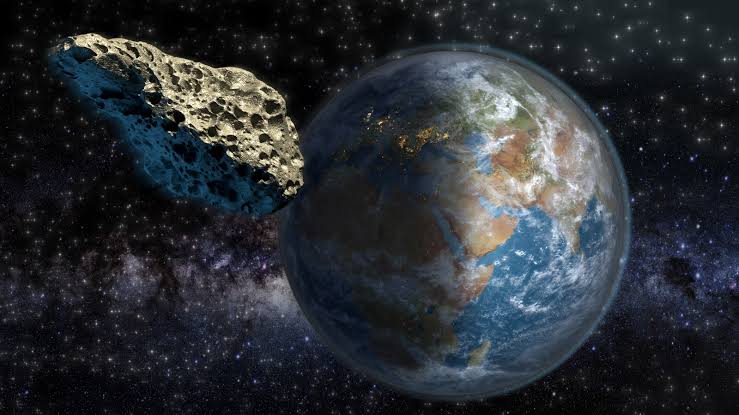
NASA Confirms New Docking Schedule for International Space Station
11,000 Pounds of Supplies and Experiments Aboard Cygnus XL
NASA continues to stay at the center of attention with two major updates this week. On September 18, 2025, space watchers in the United States and around the world followed closely as NASA news September 2025 confirmed progress on a cargo delivery to the International Space Station (ISS) and issued details about a large asteroid making a close pass by Earth. Both events show how the agency works daily on exploration and planetary defense NASA.
One headline update involves the Cygnus XL cargo spacecraft, operated by Northrop Grumman in partnership with NASA. The spacecraft was sent to the International Space Station (ISS) carrying more than 11,000 pounds of supplies, experiments, and hardware for astronauts living and working in orbit. However, during its journey, a software safeguard triggered and caused the main engine to shut down early. This glitch delayed docking with the ISS, raising concerns about whether the spacecraft could complete its mission.
Engineers quickly investigated the issue and created an alternate plan for orbital burns to safely guide the spacecraft. NASA International Space Station update confirmed that Cygnus XL cargo spacecraft remained on a safe trajectory and would still reach its destination. The new schedule places docking at 7:18 a.m. EDT, when astronaut Jonny Kim will operate the Canadarm2 robotic arm to capture and attach the spacecraft. Once docked, Cygnus XL will stay connected until March 2026, ensuring months of supplies and research support for ongoing missions in orbit.
The second major NASA mission update is about asteroid tracking. On the same day, an asteroid named asteroid 2025 FA22 is passing close to Earth. The rock is estimated to be between 120 and 280 meters in size, making it larger than many tall landmarks on Earth. Moving at speeds of about 24,000 miles per hour, the asteroid has drawn attention because of its size and proximity. Despite the headlines, NASA asteroid tracking 2025 confirms there is no risk of a collision. The asteroid close approach 2025 will happen at a safe distance, offering scientists another chance to test monitoring systems and refine orbital predictions.
This event highlights the broader effort in planetary defense NASA, where scientists work to detect, monitor, and analyze near-Earth objects. Tracking these asteroids is critical for preparing against any potential future threats, and missions like DART have already shown progress in deflecting small space rocks if ever necessary.
For people following U.S. space news September 2025, these two updates show both sides of NASA’s mission. On one hand, the agency supports astronauts in space through cargo deliveries. On the other, it protects Earth by studying objects like asteroid 2025 FA22. Together, they prove that NASA news September 2025 is about more than headlines — it’s about the constant work to keep exploration and safety moving forward.