Pratik Kamble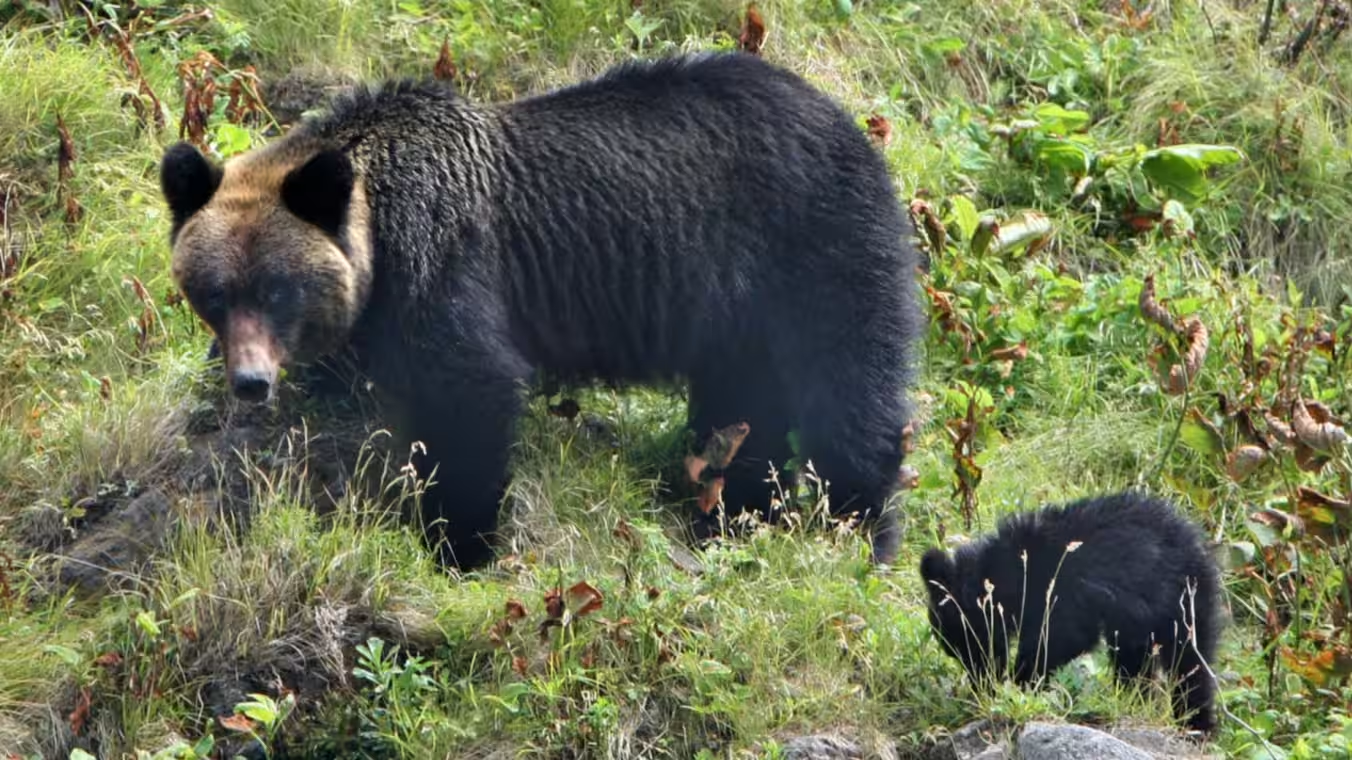
Japan Sends Military to Tackle Bear Crisis
Japan’s military deployed troops to the country’s mountainous north on Wednesday following an urgent request from local authorities overwhelmed by a surge in bear attacks. The move marks one of the rare instances of Self-Defense Forces (SDF) involvement in wildlife control, underscoring the severity of the crisis.
Officials said soldiers were sent to assist with setting traps and patrolling forested areas in Hokkaido, where several bear encounters have turned deadly in recent months.
A Growing Threat in Rural Communities
Bear attacks in Japan have reached alarming levels this year, with more than 200 reported incidents nationwide—one of the highest tallies on record. Experts attribute the spike to shrinking natural food sources, such as acorns and berries, forcing the animals closer to human settlements.
In the northern prefectures, residents have reported bears wandering into towns, damaging crops, and attacking farmers. Local governments, stretched thin by repeated emergency responses, appealed for national help.
SDF Joins Forces with Local Hunters
According to Japan’s Defense Ministry, SDF personnel are working alongside trained hunters and wildlife officials to locate and trap the animals. Troops are primarily stationed in remote mountain passes and dense forests, where access is limited.
“We are treating this as a public safety emergency,” said a spokesperson for the Hokkaido government. “The goal is to prevent further casualties and restore calm in affected areas.”
Military engineers have also been tasked with clearing overgrown trails and setting up monitoring equipment to track bear movements.
Environmental Factors Behind the Surge
Wildlife experts warn that climate change and declining forest food supplies may be driving bears into human habitats. Unseasonably warm temperatures have delayed hibernation patterns, extending the period during which bears search for food.
“We are seeing a disruption in natural cycles,” said biologist Dr. Yuto Tanaka. “Bears are adapting to survive, but that means they are coming into conflict with people more often.”
Government Under Pressure to Act
The Japanese government faces mounting public pressure to improve rural safety measures and strengthen wildlife management policies. Environmental groups have called for a balance between public safety and conservation, noting that Japan’s bear population—particularly the endangered Ussuri brown bear—plays a key role in maintaining forest ecosystems.
Local authorities have expanded public awareness campaigns, urging residents to carry bear bells, avoid forest trails at dawn and dusk, and promptly report sightings.
A Nation on Alert
With winter approaching, officials hope colder temperatures will soon drive the bears back into hibernation. Until then, the joint civilian-military operation will continue.
For many rural communities, the deployment brings a sense of relief after months of fear and uncertainty—but it also highlights how rapidly changing environmental conditions are testing Japan’s ability to coexist with its wildlife.