Pratik Kamble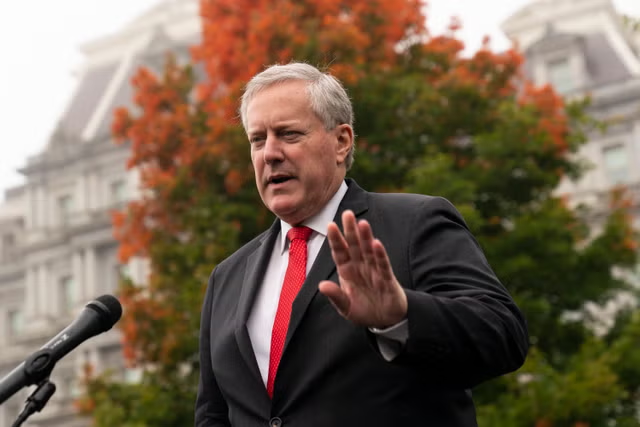
Mark Meadows Pays Tribute to Dick Cheney: ‘A Formidable Force in U.S. Politics’
Former White House Chief of Staff Mark Meadows honored former Vice President Dick Cheney on Tuesday, calling him “a titan of American politics whose influence reshaped the modern vice presidency.”
Speaking in an interview on Newsmax, Meadows reflected on Cheney’s decades of service and strategic acumen, emphasizing how his leadership during the George W. Bush administration left an enduring impact on U.S. national security and political governance.
“Dick Cheney’s intellect, discipline, and understanding of power made him one of the most consequential vice presidents in our history,” Meadows said.
A Legacy That Redefined the Vice Presidency
Cheney, who served as Vice President from 2001 to 2009, was often described as the most powerful vice president in U.S. history. His tenure redefined the office from a ceremonial role into one of deep influence over foreign and defense policy.
Meadows highlighted Cheney’s pivotal role after the September 11 attacks, noting how his approach to national security and counterterrorism shaped U.S. policy for years to come.
“In moments of crisis, Cheney’s steadiness and strength guided decisions that protected America,” Meadows remarked.
He credited Cheney for transforming the role of vice president into a position of strategic counsel — one that worked hand-in-hand with the president rather than standing on the sidelines.
Influence Beyond the White House
Even after leaving office, Cheney remained an influential voice within the Republican Party, advocating for strong national defense and conservative principles.
Meadows noted that Cheney’s policy instincts and political experience continue to inspire many within the GOP, especially on issues of security and governance.
“You didn’t have to agree with every decision he made,” Meadows said, “but you couldn’t ignore his impact or his commitment to America’s safety and strength.”
Political analysts have long credited Cheney with reshaping how power is exercised within the executive branch, often balancing the tension between national security and civil liberties.
Reflections on Character and Leadership
Meadows also spoke personally, describing Cheney as a mentor figure whose leadership style blended precision, pragmatism, and an unwavering belief in American exceptionalism.
“He demanded excellence, but he also valued loyalty and courage,” Meadows added. “He was never afraid to make the hard calls when the nation needed direction.”
Cheney’s leadership, Meadows said, offers lessons for future generations about the weight of responsibility that comes with public service.
A Symbol of Political Strength and Controversy
While Cheney’s policies — including the Iraq War and expanded surveillance programs — remain subjects of debate, Meadows said history will remember him as “a statesman who stood firm in turbulent times.”
Political observers agree that Cheney’s shadow still looms large over modern conservatism, influencing figures who value strong defense, limited government, and executive resolve.
“He was complex, he was bold, and above all, he was committed to America,” Meadows concluded.