Pratik Kamble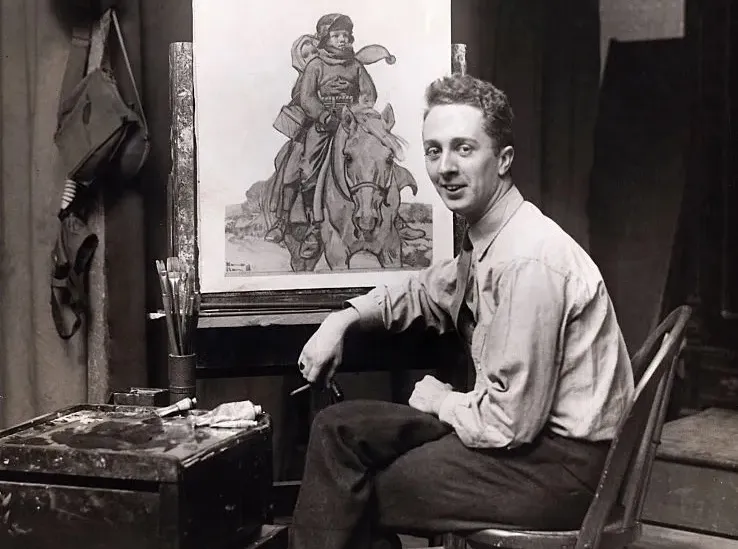
Norman Rockwell’s Family Speaks Out Against DHS
The family of Norman Rockwell said the late artist would have been “devastated” by the Department of Homeland Security’s (DHS) recent use of his paintings in official social media posts.
In a statement released Tuesday, Rockwell’s descendants condemned the department’s appropriation of his work, saying it distorts the values of unity, compassion, and equality that defined his artistic legacy.
“Our grandfather used his art to celebrate the best of America — inclusion, decency, and democracy,” the Rockwell family wrote. “Seeing his work used by an agency promoting fear and division would have devastated him.”
DHS Posts Spark Backlash
The controversy began when the Department of Homeland Security shared a series of social media posts featuring Rockwell’s iconic Americana imagery, including adaptations of his “Four Freedoms” series.
The posts, which aimed to highlight the agency’s community protection efforts, were widely criticized online for co-opting Rockwell’s imagery to promote a message seen by many as inconsistent with his humanitarian ideals.
“It’s an insult to the spirit of Rockwell’s work,” said Dr. Caroline Gates, an art historian at Boston University. “His paintings reflected empathy and civil liberty — not surveillance or control.”
Rockwell’s Legacy and Values
Norman Rockwell (1894–1978) remains one of America’s most beloved painters and illustrators, known for works that captured the heart and soul of mid-20th-century life. His art — often published in The Saturday Evening Post — celebrated family, freedom, and community with sincerity and warmth.
However, in his later years, Rockwell also used his art to champion civil rights and equality, famously painting “The Problem We All Live With” (1964), depicting Ruby Bridges, a young Black girl integrating an all-white school in Louisiana.
“Rockwell believed in the dignity of every person,” said Tom Rockwell, the artist’s grandson. “To use his work to justify fear-based policies is a betrayal of what he stood for.”
Public and Political Reaction
The posts sparked bipartisan criticism from lawmakers, cultural commentators, and citizens alike.
Democratic Rep. Jamie Raskin (D-MD) said the move was “tone-deaf and disrespectful,” while Republican Sen. Mitt Romney (R-UT) called it “a clear misunderstanding of American values.”
Even supporters of the DHS campaign acknowledged the backlash, with agency spokesperson Linda Rowe admitting that “the creative team did not anticipate the negative reaction” and confirming that the posts were removed within 24 hours.
Cultural Impact and Broader Debate
The Norman Rockwell DHS controversy has reignited debate over the use of cultural symbols in political messaging, particularly how historic art is reinterpreted in modern government communication.
Art experts say the incident underscores the tension between public art ownership and artistic intent, reminding agencies to approach such material with care and context.
“Rockwell’s art belongs to the American people,” said curator James Cole of the Norman Rockwell Museum. “But that doesn’t mean it can be used to promote values the artist himself rejected.”
A Legacy Worth Protecting
The Rockwell family concluded their statement by urging federal agencies and organizations to respect artistic legacies and “use art to unite, not divide.”
“Norman Rockwell’s America was about empathy, not enforcement,” the family wrote. “He painted the world he hoped to see — not one filled with fear.”