Pratik Kamble
🇻🇪 Venezuela Prepares Guerrilla Resistance, Anarchy Plan Against US Attack
Amid heightened tensions and an increased U.S. military presence in the Caribbean, reports indicate that the Venezuelan regime led by President Nicolás Maduro is actively preparing a sophisticated, two-pronged strategy to counter any potential U.S. air or ground invasion. Acknowledging their disadvantage against U.S. conventional forces, the government is planning a prolonged guerrilla-style resistance campaign coupled with a disruptive measure codenamed “anarchization.”
These planning efforts reveal a pivot toward asymmetric warfare—a strategy designed not to defeat the U.S. military outright, but to make the cost of occupying or stabilizing Venezuela prohibitively high, potentially forcing an early withdrawal.
⚔️ Strategy 1: Prolonged Asymmetric Resistance
The publicly acknowledged military strategy is built around small, decentralized units designed for survival and sabotage rather than pitched battles. The goal is to avoid being destroyed in a conventional first strike and then bleed the occupying force through continuous, unpredictable attacks.
Dispersing Weapons and Forces
- Tactics: Reports suggest the deployment of specialized military units, primarily from the National Guard, at hundreds of strategic locations across the country. These units have orders to immediately disperse and go into hiding upon the first sign of an attack. Their mission would then transition to classic guerrilla operations: ambushes, infrastructure sabotage, and targeting supply lines.
- Weaponry: Venezuela has reportedly been deploying its most advanced, yet most vulnerable, assets. This includes distributing Russian-made Igla-S shoulder-fired missiles—a critical tool for targeting low-flying aircraft or helicopters—and preparing its Russian S-300 air defense systems and Sukhoi fighter jets, though the operational readiness of the latter is consistently questioned by analysts due to chronic maintenance issues.
- The Goal: The military’s objective is not territorial defense but rather disruption and sustained combat over weeks or months, turning any invasion into a political quagmire for the intervening nation.
💥 Strategy 2: The Anarchization Playbook
The second, darker aspect of the resistance plan is the strategy of “anarchization,” a measure aimed at ensuring the post-invasion environment is completely ungovernable, even after the main military engagements have ended.
- Sowing Chaos: This plan involves pro-regime armed groups, primarily the notoriously violent civilian militias known as colectivos, which are estimated to number over 100,000 members. These groups would be tasked with inciting chaos in major cities like Caracas.
- Civic Unrest: By arming and activating this paramilitary force, the regime plans to initiate widespread destruction, attacks on critical infrastructure (like water and power facilities), and confrontations that would blur the lines between civilian and combatant. The aim is to create a situation so anarchic and unstable that it would exhaust the patience of the invading forces and the international community.
- Psychological Deterrence: This tactic is designed to deter the U.S. by showcasing the likelihood of a long, bloody, and politically toxic nation-building or stabilization effort, thereby strengthening the argument against intervention.
⚠️ Escalation and the U.S. Military Presence
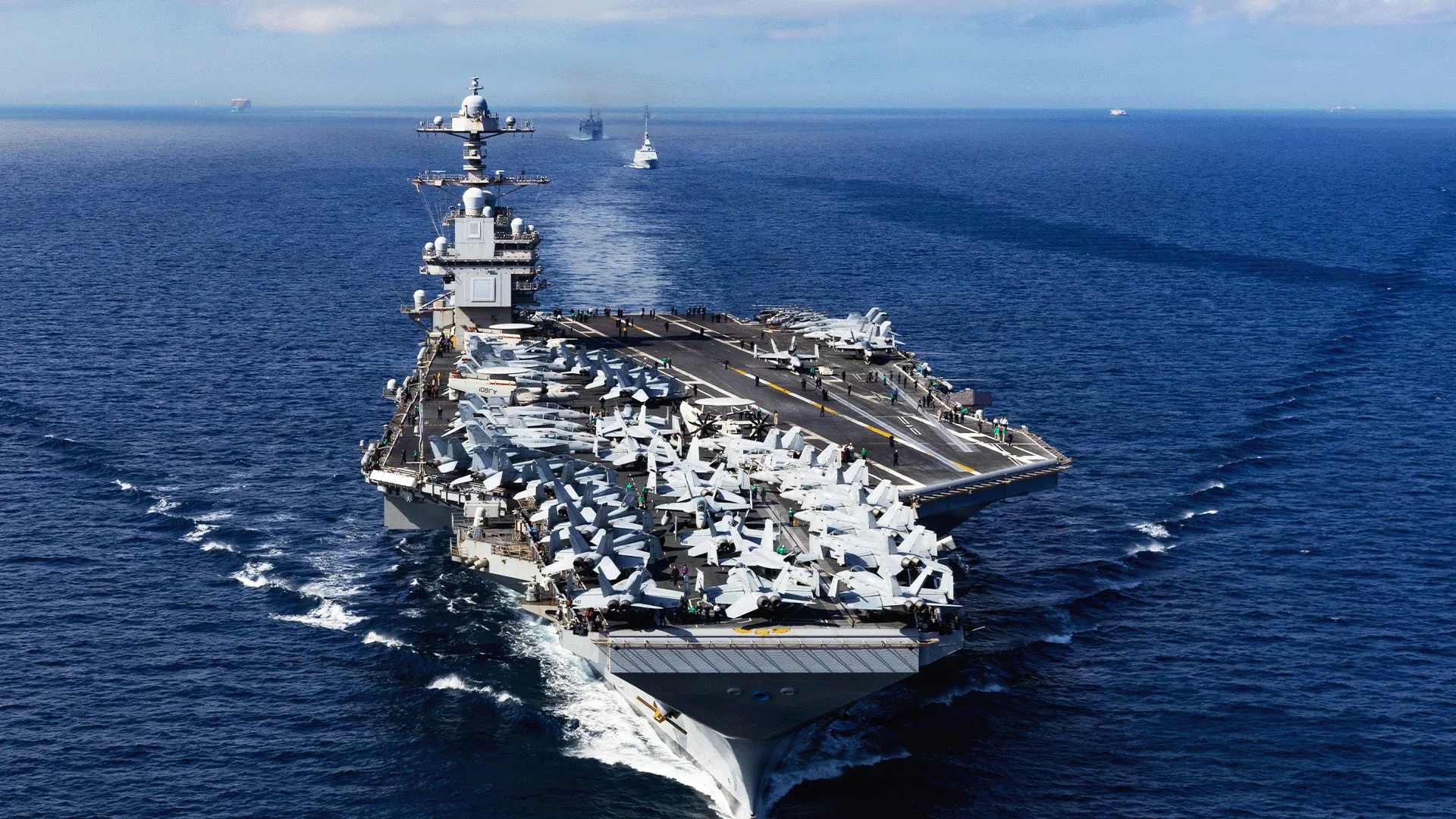
These resistance preparations come as the U.S. has notably increased its military footprint in the region. Recent deployments have included the USS Gerald R. Ford aircraft carrier strike group, alongside other warships and F-35 fighter aircraft. While the Pentagon maintains the deployments are officially for disrupting narcotics trafficking, President Maduro has publicly dismissed this justification, characterizing the build-up as a clear threat to drive him from power.
Maduro has warned that any intervention would be met with fierce loyalty, stating, “millions of men and women with rifles” are ready to defend the nation. Ultimately, the detailed resistance plans confirm that Venezuela’s strategy hinges on a desperate hope: that the prospect of a bloody, protracted guerrilla war, fueled by chaos and civic disorder, is enough to deter an attack by the conventionally superior United States.