Pratik Kamble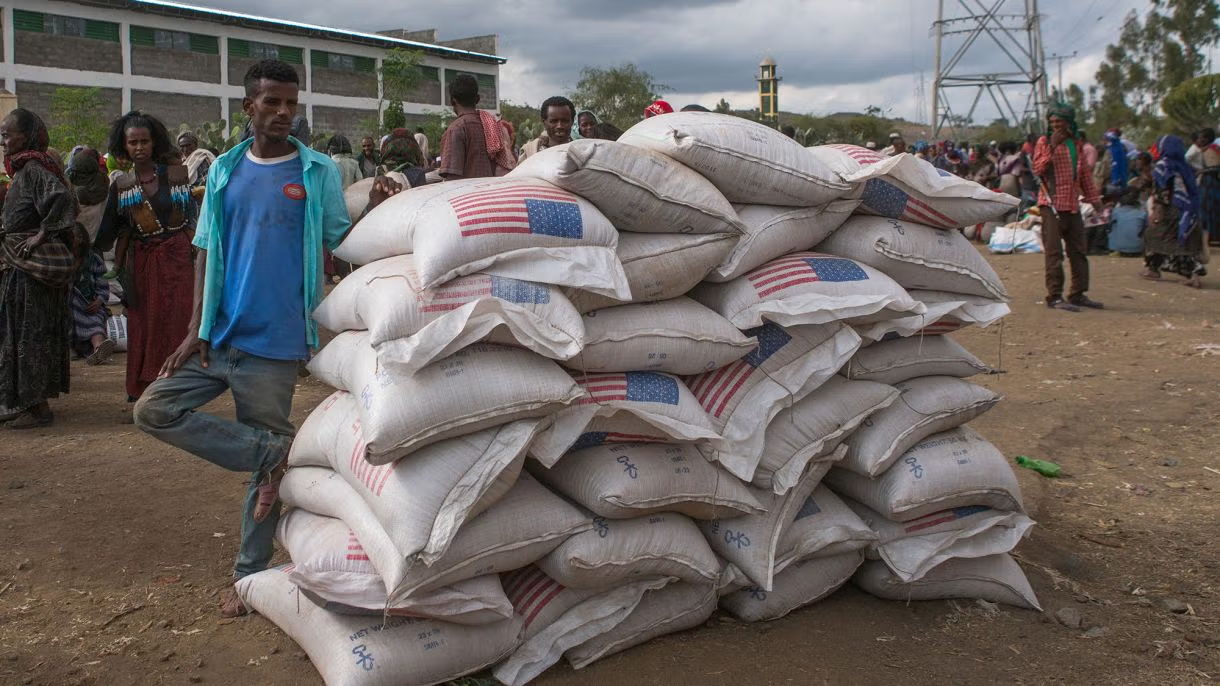
🇺🇸 77% of Voters Support Foreign Aid Tied to U.S. Interests & American-Made Products: Survey
A new nationwide survey by McLaughlin & Associates reveals that a massive majority of American voters are not opposed to foreign aid, but they strongly support its strategic use. The poll found that 77% of likely voters approve of U.S. foreign assistance when it meets two key criteria:
- It serves strategic national interests (strengthening alliances, bolstering U.S. security).
- It uses American-made products to save lives and support the U.S. economy.
The findings provide political cover for the administration’s new, highly criticized foreign assistance strategy, which replaces traditional grant-based aid implemented by NGOs with direct, bilateral agreements that prioritize American interests and procurement.
🎯 Foreign Aid as Strategic Investment
The survey, which polled 1,200 likely voters, suggests that the traditional public opposition to foreign aid is rooted in the perception of waste and corruption, not a fundamental opposition to helping other countries. When framed as a strategic tool, support becomes overwhelmingly bipartisan:
- Bipartisan Support: Nearly three-quarters of Trump voters (76%) and Republicans (76%) view this type of aid as a “strategic investment in American leadership.” Critically, a large majority of Independents (72%) also share this sentiment.
- Top Motivations for Support: Voters were pragmatic about their reasons for supporting international assistance:
- National Security (35%): Citing reasons like countering adversaries (China, Russia, Iran).
- Economic Benefits (23%): Supporting U.S. farmers and small businesses.
- Moral Obligation (19%): Citing humanitarian or religious duty.
📦 The “American-Made” Mandate
A particularly striking finding was the support for tying aid directly to U.S. manufacturing and agriculture:
- Humanitarian Goods: By an overwhelming 8-to-1 margin (81% to 10%), voters support allocating a tiny fraction of the budget to ship U.S.-made therapeutic food to starving children.
- Public-Private Partnerships: Nearly three-quarters of Americans (73%) favor creating a new partnership model to deliver aid directly using U.S.-made products, which bypasses the United Nations and other multilateral organizations.
- Food for Peace Revival: The poll found widespread support for reviving the Eisenhower-era “Food for Peace” program, which both aids foreign nations and boosts American agricultural exports.
🏛️ Political Implications
The survey acts as a powerful endorsement of the administration’s new “America First Global Health Strategy” and the broader shift in foreign policy. The message to Congress is clear: voters are not asking to eliminate foreign aid, but rather to make it accountable, targeted, and beneficial to American economic and strategic interests. This strategic messaging allows the administration to defend cuts to traditional aid while claiming popular support for its more transactional, security-focused approach.